Latest windows: The Year of the Dragon

January 24, 2012

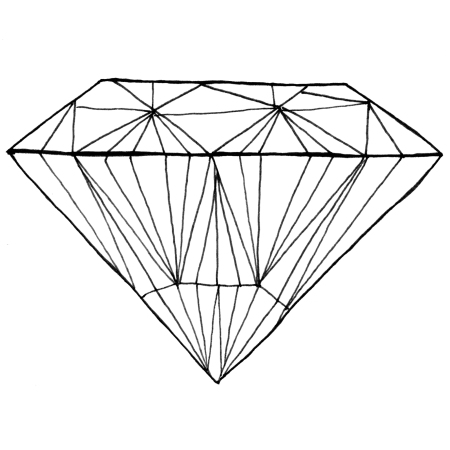
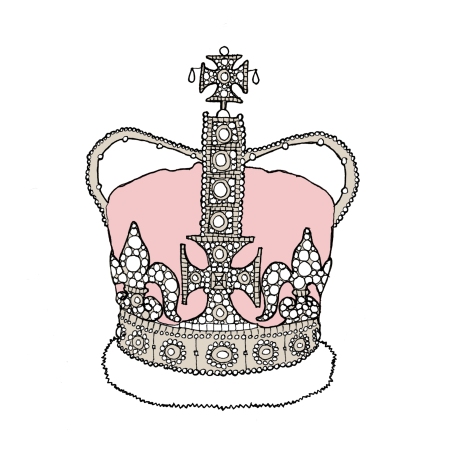
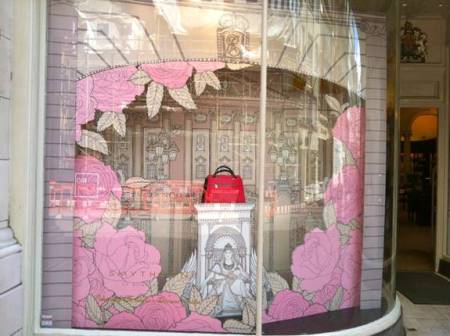
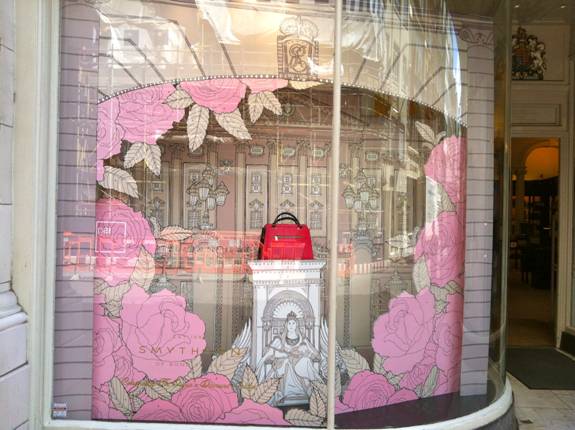
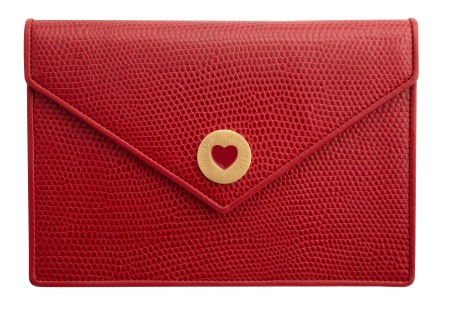
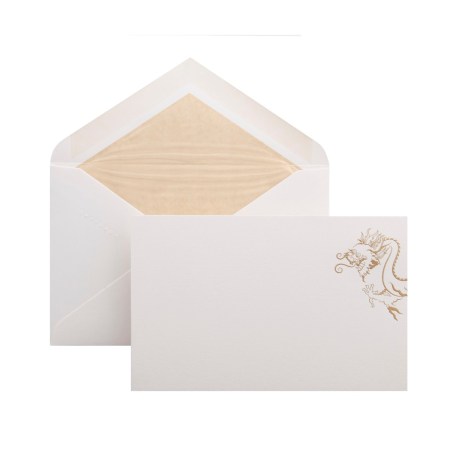
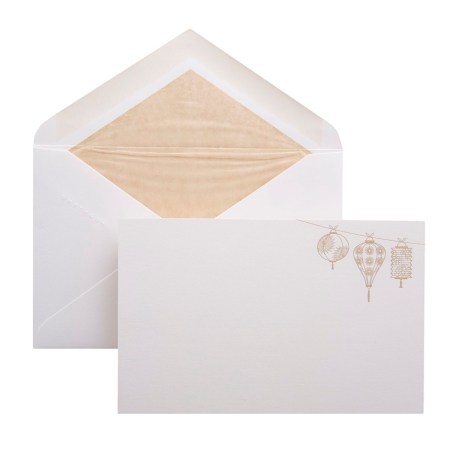
We’re celebrating the Year of the Dragon this week with a new window display reflecting two new correspondence card motifs designed especially for Chinese New Year.

How will you be celebrating? Check out our guest blogger, Susie Lau’s recipe for a traditional Chinese New Year treat

Susie’s Chinese New Year

January 23, 2012

Our guest blogger, Susie Lau, tells us how she celebrates the holiday and shares a special family recipe for a traditional sweet treat…

When people ask how I celebrate Chinese New Year, the unfortunate answer is that I’m now normally working as Chinese New Year falls during New York Fashion Week.  Hurrah for the Year of the Dragon then as Chinese New Year has fallen early.

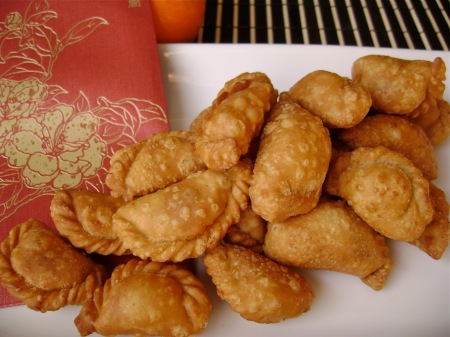
We kick off Chinese New Year Eve this Sunday on the 22nd and then Chinese New Year begins on Monday followed by fifteen days of festivities.  In other words, that’s two solid days of eating.  I’ll be stuffing my face with my mother’s cookies and cakes that she makes especially for this time of year.  In particular, the peanut puff or “little horns” as we call them in Cantonese is a favourite of mine because they’re portable and I’ve yet to meet someone who doesn’t find them addictive and moreish.

They sort of look like tiny Cornish pasties and the pastry has a crunch/biscuit texture to them as they’re made by deep fat frying.  You bite in to find a sweet peanut filling that can vary from recipe to recipe.  

I’ve probed my mum for her particular recipe and here it is.  She likes to make them quite small and dainty so they’re bitesize but you’ll see them in all sizes.  The tricky bit is the pinching and locking of the puffs but it’s always funny to see how they turn out depending on how nimble your fingers are. 

To make 48 little puffs.

Pastry
Sieved Plain flour 225g
1 egg
Water 60ml
Peanut oil 2 tablespoons (try to buy it at a Chinese supermarket – my mother says it’s more fragrant)

Filling:
Sesame seeds 60g
Unsalted peanuts 60g
Finely desiccated coconut 60g
Granulated sugar 120g

Vegetable oil for frying

Make the filling first so you have it ready to work with.  Toast the sesame seeds and peanut in a pan over a low heat until they are golden.
Break up the peanuts in a food processor until they resemble fine breadcrumbs.

Mix the sesame seeds, peanut crumbs, coconut and the sugar together so that you have a dry filling. 

Now make the dough.  Mix all the dough ingredients together, kneading it until it forms a smooth dough.  Add flour if it’s too sticky or a little oil if it feels a bit dry. 

Divide the dough into four. 

Roll each lump of dough out into a rectangular shape that is about 20cm wide and then roll from the longer edge like you would a cigarette so that you get a tube.  This forms the layers in the pastry that puffs up when fried later. 

Cut up the tube into twelve small pieces. 

Do the same with the other three piles of dough so that you end up with 48 little chunks of dough.

Roll each piece out into a circle shape, about 7cm wide and 1-2mm thick.  

Spoon a small teaspoon of filling into the middle and then fold over into a semi-circle shape and press the edges together.

Now lock the edges.  This can be a little tricky.  Starting from one end, pinch the edge and fold over and do this pinch and fold action until you get a sort of twisted braid going around the edge of the peanut puff.

Repeat for the other 47 puffs.  It’s a real family exercise to fold and lock these little puffs and I used to help my mum do this even if mine always turned out a little misshapen. 

If you use deep fat fryer, heat to 170 degrees and if you’re using a wok or a pan, heat the vegetable oil to medium heat.  Make sure the oil isn’t too hot as you don’t want to burn the puffs. 

Then drop in the puffs, ten to fifteen at a time, depending on the size of your wok or the deep fat fryer.  Use a metal fish slice to stir the puffs into the oil to ensure an even colour.

Once they are golden brown, lift out and drain on kitchen paper. 

It’s best to cool them for an hour before storing them in an airtight container (we use old biscuit tins at home) lined with greaseproof paper. 

They should last a few months in the tin but you’ll probably eat them within two weeks!

The 1908 Smythson Pocket Diary

January 11, 2012

Happy New Year! Will you be starting 2012 with a new Smythson diary? Did you know – first introduced in 1908, our now iconic Panama diary (then known as the “Featherweight”) was specifically designed to fit a gentleman’s inside jacket pocket.

In 1924, the Wafer diary was created as a lady’s alternative to the “Featherweight”, designed to fit into a small handbag…

Thank You on Paper

December 19, 2011

From her consultation in our New Bond Street salon to witnessing the traditional printing process at our Wiltshire factory, Susie Lau follows the progress of her very own set of bespoke stationery

Fashion does perversely honour tradition in unexpected ways.  One of the quirks of the industry is the abundance of thank you notes that go back and forth. In just one week, I’ve received three notes in the post and incidentally, they’ve all been printed on Smythson stationery.   I put this down to the industry’s love of print and the tactability of paper, which Smythson have a rich history in providing.   There’s something truly lovely about receiving a handwritten note in the post that is infinitely more intimate than a quickfire email.

That said, it’s taken me up till now to gather up the resources to make up my own correspondence cards.  It could be my insanely illegible handwriting that has stopped me from getting my first proper set of stationery done.  I’ll have to take the chance that people out there will somehow be able to decipher my scribble.  Plus I now have a legitimate excuse to use the insanely cute coloured pens I’ve picked up from my travels to Tokyo to write on these cards.

Smythson’s stationery salon is a quiet haven of rustling cards, tissue paper inlays and lovely die-stamped letters and a bulging catalogue of motifs for you to choose to head up your cards or stamp your envelopes with.  I settled for a grey border, grey tissue lining and pink text and motif combination, clashing the sensible and the frivolous.

I did resist the urge to go for a motif that was ultra literal and slightly cheesy….

Instead, I chose a camera motif, which wasn’t actually in the catalogue but was a never-before used motif from the archive.

I was then lucky enough to visit Smythson’s factory in Wiltshire where decades-old machinery have been printing their stationery for years with the traditional methods of copperplate printing.

A negative image is put through a copper plate etching machine to achieve the final plate that will be used in the printing press, a process that has thankfully been speeded up but would have taken hours to achieve just one plate, when done by hand in the past…

The plate is then loaded into the printing press and once the rollers are inked up, each piece of paper or envelope is individually placed there and stamped with the motif or text.  It’s an eye bogglingly manual process, one that requires a knack of timing and an in-depth knowledge for how the machines are run.

We then moved on to the section where borders and gilding of card edges are done.  It’s another highly skilled manual process that isn’t governed by science but by simply knowing by eye, how the paint or gold/silver leaf will hit the card.

The application of this gold leaf on to the edge of these cards was pretty stunning to watch….

Then I watched my set of cards get their grey borders and was amazed at how evenly spaced the cards were in order to be sprayed with precision…

Even the envelopes were made up by hand with the all over tissue lining being something of a Smythson signature.  I had a go at gluing together a few of them but I don’t think I got the full hang of it.  Hopefully nobody actually receives my duff envelope in their stationery set…

We then went into the finishing room to see some Christmas cards being packaged up ready to go out, which reminds me that I’m woefully late with my own Christmas stationery.

Smythson keeps all their plates archived and never throws them away.  It was pretty special going through the ‘Celebrities’ drawer stuffed full of luminaries’ names…


My Smythson Stationery journey ends with these familiar blue boxes.  I’ve not yet sent one out yet but after my birthday and the Christmas period of December, I’m sure these will be winging their way, complete with my childish scrawl, to some hopefully grateful recipients.


From the Archive: Personalised Stationery – The Smythson Touch

December 12, 2011

Our company archivist, Vicky Britton, explores our heritage in personalised stationery…

From the understated simplicity of the traditional, to the showmanship of the latest style, Smythson have been offering the discerning customer the best in luxury bespoke stationery design for over 100 years.

Colourful Bespoke Die-stamped Christmas Card, 1900

Blind Embossed Bespoke Christmas Card, 1903

Having produced an array of beautiful bespoke greetings cards from the turn of the 20th century, Smythson was soon established as the foremost British stationers, supplying town and country houses across Britain.

Personalised “Bon Voyage” Greeting Card, 1911

During WWI, Smythson’s Marston Mill paper (85gsm/21lbs) was suggested as an ‘ideal weight for letters to the front’ and colourful, hand-crafted greeting cards were produced wishing the recipients positive thoughts for the coming year, despite the prolonged hardships faced by many.

Examples of WWI Bespoke Greeting Cards

During the days of the Empire, Smythson also produced stationery for the Imperial Families of Japan, the Prince of Abyssinia and the Governors of Bengal, Bombay and Madras.

By far the most elaborate stationery was produced during the 1920s and 1930s for the Maharaja of India; hand-bordered paper decorated with personal monograms engraved in gold, silver and rich colours with delicate mother-of-pearl inlay.

Example of personalised stationery made using rich, die-stamped colours and mother-of-pearl inlay, 1920s-1930s

One of the most cherished pieces in our archive is a bespoke cocktail invitation produced for the Maharaja of Jodhpur in 1932, featuring the Maharaja’s ornate crest, hand-engraved with an early aeroplane.

Gold-stamped cocktail invitation produced for the Maharaja of Jodhpur, 1932

This elaborate stationery has continued to impress and inspire, with many notable VIPs taking inspiration from the quality and design of these old pieces when designing their own bespoke stationery.

Find out more about ordering your own personalised stationery here.

New Christmas Windows: An Enchanted Forest…

November 30, 2011


Our magical new Christmas windows have just been installed!  Visual merchandiser, Marco, explains the inspiration behind them:

“The set is made with tarnished mirror panels, real birch tree trunks and bulb lights, and features birds, owls, moss and snow to bring that dreamy, enchanted forest feel alive.


“The concept was inspired by the fantasy lands of films such as The Neverending Story and The Chronicles of Narnia, with the idea that by walking through a magic mirror, you reach an enchanted forest where Smythson products wait to be picked up – and given as gifts.

“The light reflecting on the mirror panels creates a beautiful atmosphere, most of all at night-time, and the trees give an organic, warm feel. The garlands framing the windows reinforce the forest concept and at the same time create a cosy Christmas mood.”

What do you think of our new “Enchanted Forest” windows?

In Conversation with Janice Blackburn…

November 22, 2011

Interviewed in our autumn/winter ’11 journal,  Janice Blackburn, an esteemed freelance curator of contemporary craft and design—including at Sotheby’s, speaks about her passion for discovering new talent and curating the “Royal Memorabilia” exhibition for Smythson last April.

When you walk into a graduate show what are you looking for?

In a crowded space I can see exactly what interests me. I have a way of editing what my eye likes and doesn’t like. Usually I hone in on one thing: it could be hidden or tucked away in a corner. I know exactly what I’m looking for.

Which is?

Originality, something really unique. It’s actually quite difficult to find people who have got a really unique way of expressing themselves. And it can be quite odd stuff, usually for me it is quite odd stuff.

In terms of your own collection,what were the first pieces you fell in love with?

I used to go to markets and buy Clarice Cliff and Mabel Lucie Attwell. She was a children’s illustrator in the 40s and 50s. I’m compulsive. I can’t not collect.

How would you describe your aesthetic as a collector?

That horrible word “eclectic”, which I absolutely hate. It’s a bad word. I suppose I’ve got a slightly eccentric eye. Maybe that’s what it is. It’s not the conventional way of looking at things.

It has been said that you have brought a younger, grittier crowd to Sotheby’s. Would you agree?

Yes, because the shows are really interesting. I’ve shown people who have done taxidermy. Again, because I’m not a dealer, I can afford to take a risk if I think someone is really worth showing.

What was the appeal of curating for Smythson?

I thought Smythson was a perfect showcase for the sort of unusual, somewhat quirky, and very individual work I select to exhibit. Much of it is handmade and I felt it reflects the Smythson signature of craftsmanship, quality and a dash of nonconformity—strong, vibrant colours. I thought Smythson clients would appreciate the work of my exhibitors—the uniqueness, and uncompromising quality with a touch of irony and whimsy. I hope there will be more opportunities to show work by other equally talented artists and makers.

Your show in the Smythson store was called Royal Memorabilia. Could you describe it?

It was royal wedding memorabilia done in a fun witty way, not the usual boring mug or plate. A lovely girl, Katie McBride, a ceramist made a royal wedding tea set. Her name is Kate, so the line was: “He chose the wrong Kate.” A paper artist, Zoe Ross, made a beautiful paper wedding dress. She is the niece of friends. I was having dinner in their house and was enraptured by the most charming small sculpture. I couldn’t take my eyes away and realised it was mainly made of paper. I never forget interesting work and nearly a year later, selecting designers for Royal Memorabilia, I thought of Zoe. And she came up trumps. Zoe is an example of what gives me most pleasure from what I do. To mentor and help talented creative artists get noticed and sell their work. It’s a tough, competitive business and they need all the help they can get.

How did the exhibition encapsulate the spirit of Smythson?

I wanted a mix of things that were beautifully made but also had a bit of wit and sparkle and fun. It was young and it was fresh. And people smiled when they walked passed the window.

Pictured: Janice Blackburn and Zoë Ross, one of the five arts and crafts designers who created one-off pieces for our “Royal Memorabilia” exhibition

To request your own copy of The Journal, The Collaborator Issue, Autumn/Winter 2011, click here.

Show us your Smythson – Conde Nast New Markets

November 14, 2011

From Vogue India to Tatler Russia, our friends at Conde Nast New Markets show us their Smythson diaries and share what they love about them…

Laura Burkitt, PA to Anna Harvey, Editorial Director of Conde Nast International and her fuchsia Soho Diary

“A beautiful diary, with everything I could possibly need to know inside, from the best theatres and restaurant lists to visit, to New York subway maps and American / European clothing sizes which helps Anna as much as me!
Also, its nice to have a pop of fuchsia on my desk.”

Nes Denizer, London Correspondent for Vogue Turkey and her Jonathan Saunders Panama Diary


“It’s JS, it’s chic and it’s not the everyday diary too! Plus I live by the info pages!!”

Matthew Reinhold, Fashion Assistant for Vogue Russia and his silk-bound address book

“I think this book might be the most important tool in my arsenal… Every PR, photographer, assistant, intern freelancer… And also, its elegant AND black and gold!!”

Carla Bradley, Fashion Coordinator for Tatler Russia and her Peridot Soho diary and iPhone case.

“As I travel so much with my job, my Smythson diary is my lifesaver! I particularly love the to-do list on the side of the weekly diary – It helps me organize all the upcoming shoots and allows me to keep on top of important press day appointments.”

Lorna McGee, Fashion Stylist for Vogue India and her orange Panama diary

“I love my tiny note books for credits on set!! And the orange makes it perfect to find at the bottom of my bag!!’

Riana Pervez, Fashion Editor for Glamour Russia


From the Archive… Dear Diary

November 11, 2011

Our company archivist, Vicky Britton, gives a brief history of the Smythson diary…

2012 is set to be a big year with the Diamond Jubilee, the Olympics and Smythson celebrating our 125th anniversary. 125 years of innovative design and quality craftsmanship, and our diaries have formed a major part of that heritage since Frank Smythson first opened his store in 1887.

A visit to the museum at our flagship store on New Bond Street brings the history behind the Smythson diary to life, where our current ‘Dear Diary’ exhibition showcases our rich heritage and offers a chance to see some of our very early beautiful diaries, including the whimsical ‘A Mere Man’s Calendar’, first printed in 1912.

Here is a closer look at 3 founding members of the Smythson diary family…

The Royal Court Diary is the longest running diary in the range. This classic, hardbound book was one of the first Smythson diaries to be published and featured on the company’s first advertisement card.

Smythson Archive Product - 1901 Royal Court Title Page

Printed on white wove paper, its day-per-page layout offers ample room for jotting down important daily commitments. The Royal Court Diary has remained largely unchanged throughout its 125 years of production.

The quietly sophisticated Panama Diary is without doubt one of Smythson’s most iconic products. It was created in 1908 by Frank Smythson who made the world’s first truly portable diary.

Smythson Archive Product - 1908 Featherweight Diary

Originally called the Featherweight Diary, its creation was a bold move and revolutionised the way in which people used their diaries. Using a navy blue, supple leather binding and a lightweight, pale blue paper – half the thickness and weight as normally used – this new pocket-sized diary was specifically designed to fit into the inside pocket of a gentleman’s jacket.

The elegant Wafer Diary was first designed in 1924. It was (and still is) identical in content and layout to the Featherweight Diary but designed as a much smaller version for ladies – small enough to fit inside the handbag. With added details such as a miniature pencil and tuck fastening, this little diary was the height of fashionable sophistication.

From the Smythson Archive - 1924 Wafer Diary in Leather Wallet

The Smythson diary family is now bigger than ever, with a size, layout and colour to suit every customer. From traditional, understated and essential pocket diaries to seasonal Fashion and Soho diaries with beautiful jewel closures, the Smythson diary has evolved from utilitarian necessity to must-have fashion accessory, while striking a perfect balance between form and function.

What do you love about your Smythson diary?

Our ‘Dear Diary’ exhibition will be on at our New Bond Street store until January, 2012.

Journal’s Journey

November 4, 2011

Our guest blogger, Susie Lau, writes about taking part in the making of our Autumn/Winter ’11 Journal

When Smythson asked me to be apart of their first ever edition of The Journal, surprise definitely flickered across my face.  Me?  The blogger who supposedly taps away soullessly on a laptop, totally lacking in connection with the humble pen and paper, seemingly the opposite of what Smythson upholds and values?  The Journal presented itself as an opportunity to indulge in the moments that I probably don’t demonstrate enough on my blog – quiet moments scribbling way in a journal, putting pen to paper and recollecting thoughts and the mere act of treasuring the written word.

It was officially speaking, a photo shoot for The Journal, but lounging around with a notepad, flicking around an iPad all bound up in Smythson’s delicious coloured leathers for the new season and peering into brand new bags, could hardly be considered a hardship and I rather savoured the experience.

My favourite bits of The Journal weirdly were probably the piles of iPad cases, journals and camera cases all piled up in a decadent manner showing all the possible colourways that are coming up for A/W 11-12.  It makes you wonder what it would be like to have the ability to own items in EVERY SINGLE colour way which for me is but a dream.  For now though Smythson’s nile blue, violet, peridot and berry are my core favourite shades…


I absolutely love the little glimpses of Jonathan Saunders’ working world supported by his collaboration with Smythson, which was inspired by the colour palette of his A/W 11-12 collection.  The colour blocked notebooks and iPad cases are eye-catching but also discreet, and are the perfect distillation of both Smythson and Saunders’ aesthetic.

To request your own copy of The Journal, The Collaborator Issue, Autumn/Winter 2011, click here.


Follow

Get every new post delivered to your Inbox.